NCERT Solutions for Class 8 SST Part II Chapter 3 A Journey Through Indian Architecture
Page 85 - The Big Questions?
Question 1.
What role has architecture played in the Indian civilisation?
भारतीय सभ्यता में वास्तुकला की क्या भूमिका रही है?
Answer:
Architecture has played an important role in shaping Indian civilisation. It reflects India's rich cultural heritage, religious beliefs, artistic skills and scientific knowledge. Temples, stupas, forts, palaces and monuments tell us about the history, traditions and achievements of different periods. Thus, architecture is a valuable record of India's cultural and historical development.
भारतीय सभ्यता को आकार देने में वास्तुकला की महत्वपूर्ण भूमिका रही है। यह भारत की समृद्ध सांस्कृतिक विरासत, धार्मिक मान्यताओं, कलात्मक कौशल और वैज्ञानिक ज्ञान को दर्शाती है। मंदिर, स्तूप, किले, महल और स्मारक हमें विभिन्न कालों के इतिहास, परंपराओं और उपलब्धियों के बारे में बताते हैं। इस प्रकार, वास्तुकला भारत के सांस्कृतिक और ऐतिहासिक विकास का एक महत्वपूर्ण अभिलेख है।
Question 2.
What are some of the key concepts and developments behind Indian architecture?
भारतीय वास्तुकला के पीछे कुछ प्रमुख अवधारणाएँ और विकास कौन-कौन से हैं?
Answer:
Indian architecture developed through various concepts such as religion, culture, nature, science and local traditions. Important developments include the construction of the Indus Valley cities, Buddhist stupas, rock-cut caves, Hindu temples, Islamic monuments and modern buildings. The use of locally available materials, artistic designs and advanced construction techniques also shaped Indian architecture.
भारतीय वास्तुकला का विकास धर्म, संस्कृति, प्रकृति, विज्ञान और स्थानीय परंपराओं जैसी विभिन्न अवधारणाओं के आधार पर हुआ। इसके प्रमुख विकासों में सिंधु घाटी सभ्यता के नगरों, बौद्ध स्तूपों, चट्टानों को काटकर बनाई गई गुफाओं, हिंदू मंदिरों, इस्लामी स्मारकों और आधुनिक इमारतों का निर्माण शामिल है। स्थानीय रूप से उपलब्ध निर्माण सामग्री, कलात्मक डिजाइनों और उन्नत निर्माण तकनीकों ने भी भारतीय वास्तुकला को आकार दिया।
Question 3.
How is the heritage of indian architecture of relevance today?
आज भारतीय वास्तुकला की विरासत किस प्रकार प्रासंगिक है?
Answer:
Indian architectural heritage is relevant today because it shows sustainable water management. Advanced engineering and cultural harmony. These monuments inspire modern design and represent India’s rich cultural identity. Preservation efforts highlight their continuing importance.
भारतीय वास्तुकला की विरासत आज भी प्रासंगिक है क्योंकि यह टिकाऊ जल प्रबंधन, उन्नत इंजीनियरिंग और सांस्कृतिक सद्भाव को दर्शाती है। ये स्मारक आधुनिक डिजाइनों को प्रेरित करते हैं और भारत की समृद्ध सांस्कृतिक पहचान का प्रतिनिधित्व करते हैं। इनके संरक्षण के प्रयास इनकी निरंतर महत्ता को उजागर करते हैं।
Questions and Activities (Pages 124)
Question 1.
In Fig. 3.5, calculate the full width of the house; compare with the length of your classroom. How many staircases can you make out? If the house owners lived upstairs, what might the rooms downstairs be used for?
Answer:
From Fig. 3.5 (plan of a large house at Mohenjo-daro), the full width of the house can be estimated using the scale given (0 – 5 metres). The house appears to be several metres wide, possibly comparable to or larger than an average classroom.
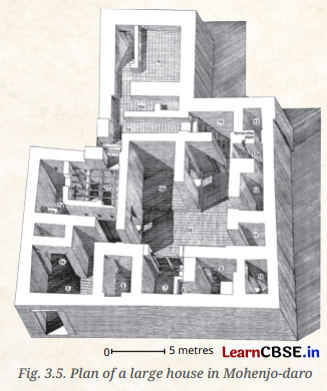
Two staircases can be made out in the plan. If the owners lived upstairs, the downstairs rooms may have been used for servants, storage. Workspaces or household activities.
Question 2.
Form groups of four or five students and imagine you are artisans with just simple tools. Looking at Fig. 3.8, how would you go about building a dome of bricks? Looking at Fig. 3.12, how would you carve such a ceiling? Discuss and compare the different groups’ conclusions.
Answer: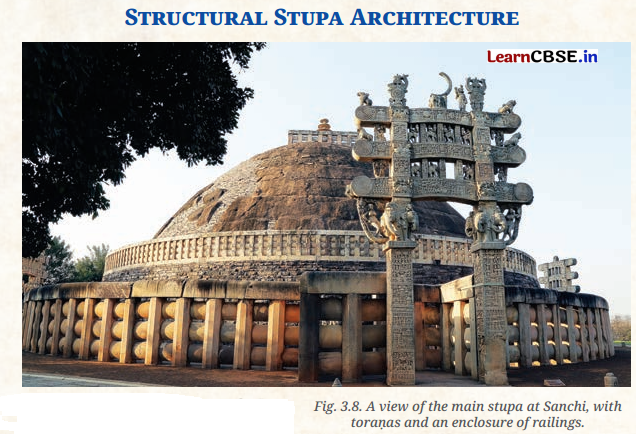
To build a dome of bricks, I would carefully arrange bricks in circular layers, gradually moving inward so that each layer supports the one above it. Proper alignment and balance would be essential to prevent collapse.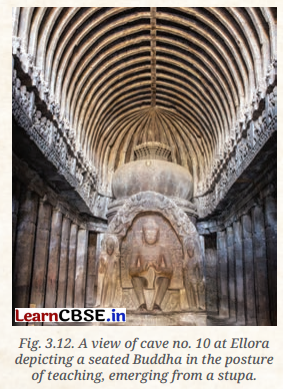
To carve the ceiling shown in Fig. 3.12 (Ellora cave), I would first plan the structure and then remove rock gradually from top to bottom. I would carefully carve the arched beams while leaving enough support to maintain strength. This work would require precise measurement, teamwork, and skilled craftsmanship.
Question 3.
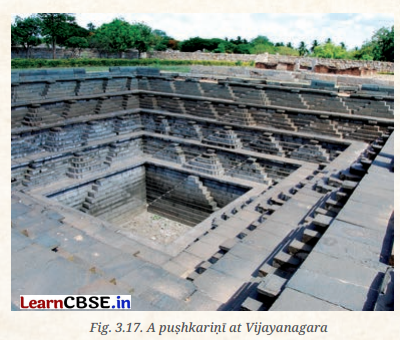
Why should there be so many stairways in Fig. 3.15? And in Fig. 3.17?
Answer:
In Fig. 3.15 (Shringaverpur reservoirs), multiple stairways would allow people to access water even when the water level changed. They also made it easier for many people to use the structure at the same time.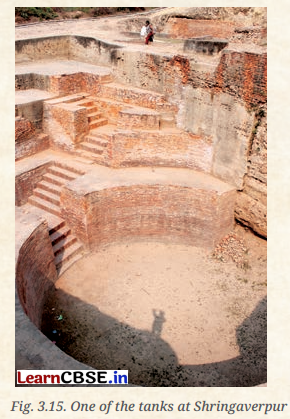
In Fig. 3.17 (pushkarini at Vijayanagara), stairways allowed devotees to reach the water for rituals and made access convenient from different sides. They also enhanced the architectural beauty of the structure.
Question 4.
Which pillars are easier to sculpt in your opinion – those in Fig. 3.25 or 3.27? Justify your answer,
Answer:
The pillars in Fig. 3.25 (Dilwara Temple) are made of marble and have delicate carvings, which require great skill but allow fine detailing.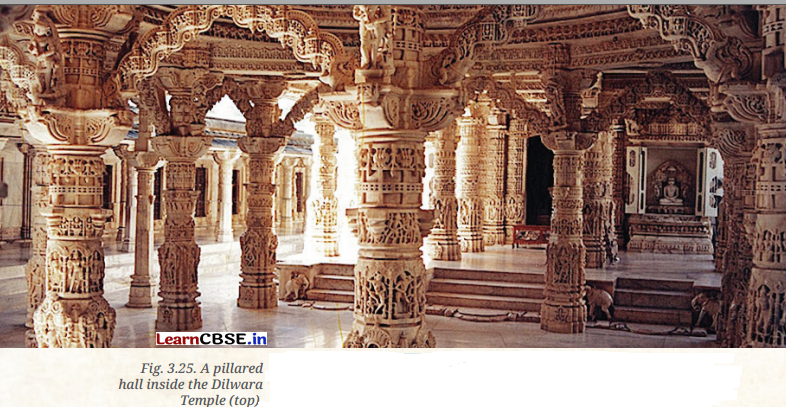
Fig. 3.27 shows terracotta surface work at Bishnupur, which involves carving and firing clay panels.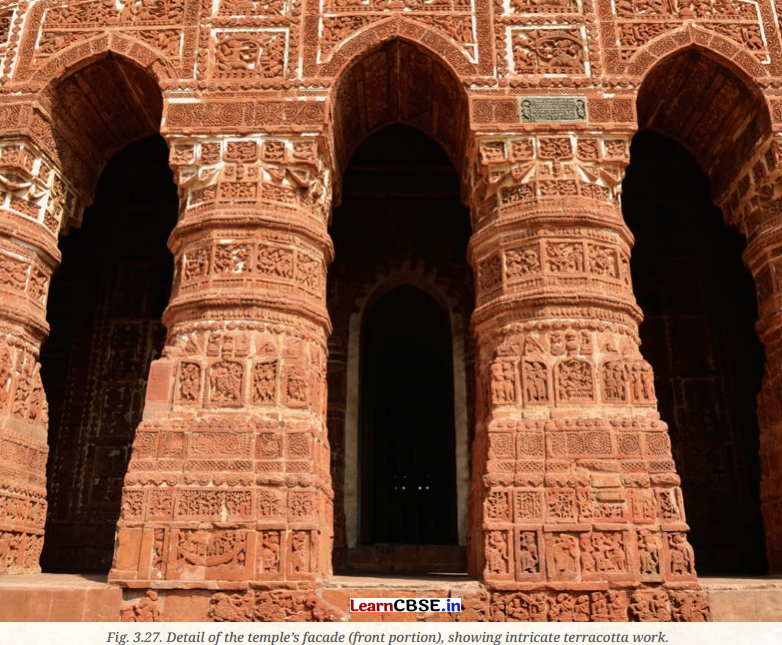
Sculpting marble pillars may be more challenging due to the hardness and need for precision, whereas terracotta allows shaping before firing but is fragile. Therefore, marble pillars likely require greater skill and precision.
Question 5.
What are some common features across the different types of temples you have visited in this chapter? What are some of the differences?
Answer:
Common features include the presence of a sanctum (garbhagriha), a hall (mandapa), a tower (shikhara or vimana), and decorative carvings. Temples often follow symbolic and spiritual principles. Differences include regional styles, shapes of towers (curving shikhara in North India and pyramidal vimana in South India), materials used (marble, sandstone, terracotta), and decorative styles.
Question 6.
In the houses shown in Fig. 3.46 and 3.47, the central courtyard will receive a lot of water during rains. Will this not flood the house?
Answer: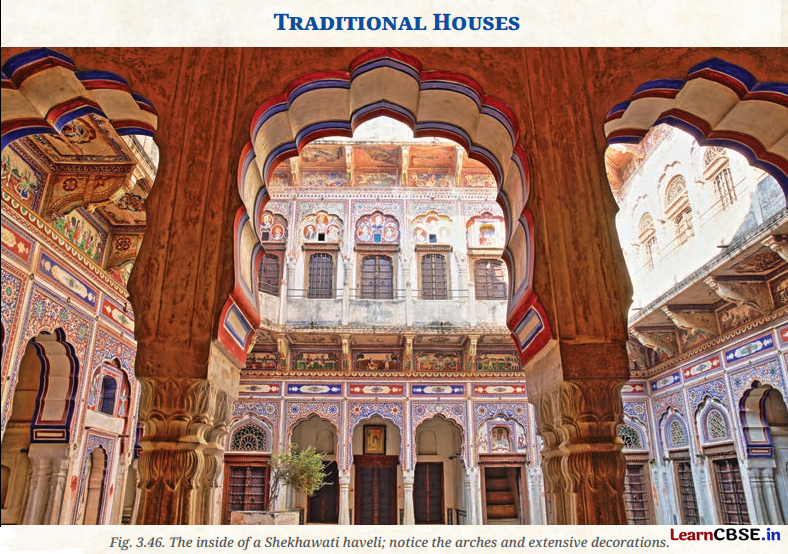
The central courtyard design is well adapted to the local climate. The courtyard allows rainwater to fall into an open central area rather than inside rooms. Proper drainage would prevent flooding. The design also improves ventilation and cooling, making it suitable for regions with heavy rainfall.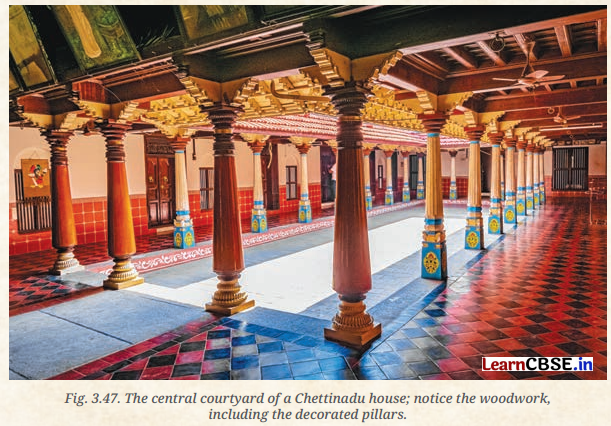
Question 7.
If you had to create a Pan-India Architecture Museum, which ten monuments would you select to represent India’s diversity and why?
Answer:
Based on the chapter, ten monuments could include: Dholavira, Sanchi Stupa, Bhimbetka Caves, Rani ki Vav, Brihadeeswarar Temple, Lingaraja Temple, Dilwara Temples, Jama Masjid (Delhi), Mehrangarh Fort, and Mysuru Palace. These represent different periods, religions, regions, materials, and architectural styles, showing India’s rich diversity.
Question 8.
Choose an ancient monument in your region. Identify what type of architecture it belongs to and the markers you used to classify it.
Answer:
An ancient monument can be classified by observing its features. For example, if it has a garbhagriha, mandapa, and shikhara or vimana, it belongs to temple architecture. If it has domes, arches, minarets, and a mihrab, it belongs to mosque architecture. Classification depends on structural elements and decorative features.
Question 9.
Different groups in the class take up examples of different types of architecture in your region. Prepare a small exhibition with brief descriptions. (Hints: Use different sources to get more information. Request your teacher to invite a scholar or expert from your region to interact with you.)
Answer:
Hints: Students can prepare brief descriptions highlighting the type of architecture (temple, mosque, fort, palace, church, water structure), materials used, architectural features, historical period, and cultural significance. This reflects the chapter’s emphasis on diversity and regional styles.
Question 10.
Highlight the biggest threats to our architectural heritage today and discuss how we can protect it.
Answer:
The chapter mentions that many monuments are in a state of neglect. Threats include poor maintenance, depletion of water sources, pollution, waste dumping, and lack of conservation. Preservation is challenging due to the large number of monuments. Protection requires proper maintenance, conservation efforts by government bodies, and cooperation from local communities and organisations.
Comments
Post a Comment